[et_pb_section fb_built=”1″ _builder_version=”3.0.72″ custom_padding=”0px|||”][et_pb_row _builder_version=”3.0.72″ background_size=”initial” background_position=”top_left” background_repeat=”repeat” custom_padding=”0px|||” custom_margin=”0px|||”][et_pb_column type=”4_4″ _builder_version=”3.0.47″ parallax=”off” parallax_method=”on”][et_pb_text _builder_version=”3.0.72″]
With the release of Katie’s new book, No More Mean Girls, I thought it was worth a reintroduction to her early book, The Happy Kid Handbook (reviewed below by our former editor). I can’t wait to review No More Mean Girls about how to teach kindness to girls in the age of social media devotion to “likes”. I think I will need this book soon! Katie Hurley, LCSW, is a child and adolescent psychotherapist, parenting expert, and writer. She is the founder of “Girls Can!” empowerment groups for girls between ages 5-11.
______
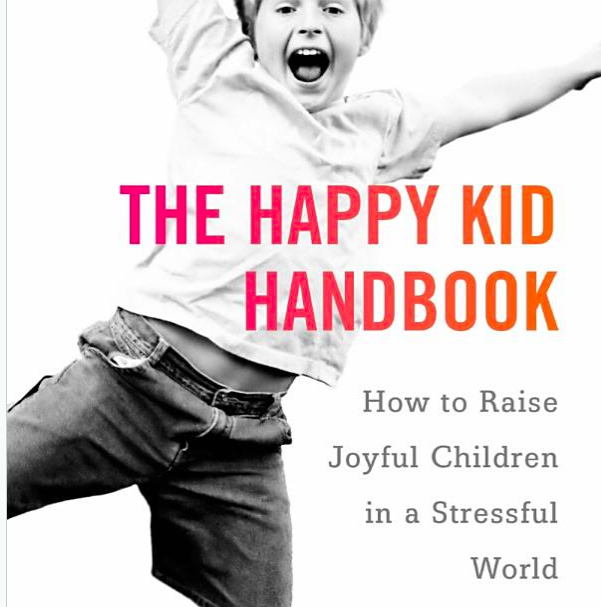
“The Happy Kid Handbook,” (Tarcher/Penguin) by Katie Hurley, is a wonderful resource for parents.
“How to Raise Joyful Children in a Stressful World,” is the second half of the book’s title, which means it’s perfect for all of us here in Brooklyn. Each of our children is so vastly different with their personality traits, emotional landscapes, and tolerances to outside influences. Part 1 is called “Raising Happy,” while Part 2 of the book is entitled, “Lessons in Coping.” This book uses the tools that Katie Hurley has honed both in her practice as a therapist, and also as a mother. At the end of the day, we want our children to be as happy as possible. Being human can make this seem difficult at times, but this book provides practical, easy-to-use strategies for reaching happiness with relative simplicity and ease. We parents like to think that we are creating the complete template for our children’s futures, like engineers, which may be true. More importantly, though, is to create emotional environments that cultivate a better feeling for them and the entire family on a day-to-day basis. “Did you know that happy kids enjoy better school performance, are more successful when it comes to making and keeping friends, and boast better health overall?” Keeping daydreamers on track, understanding introverted and extroverted behaviors, the power of play (and so many tips on great play ideas both around the house and outside), understanding emotions (with wonderful games to play for parents to help their children with their children with emotional development), are just a few of the parts of this book. In a chapter called “The Art of Forgiveness,” Hurley writes, “Have your child write or draw (or tell you and you to do the writing) scenarios that have caused hurt feelings. One by one, put those feelings into the recycling bin. Explain to your child that these feelings can be revisited by pulling out a slip of paper and talking about it and that the more he revisits them, the better he will be able to cope with them over time.” Building healthy empathy is also addressed, as it can shield children in life from “bullying, aggression, and substance abuse because empathizing with and trying to help others makes kids happy…Emphatic children grow into adults who experience better social interactions, academic performance, and accomplishments at work.” She talks about praising, and recommends to “Be specific about your praise.” Positive feedback is a wonderful thing, and shouldn’t be withheld.
[/et_pb_text][/et_pb_column][/et_pb_row][et_pb_row _builder_version=”3.0.47″ background_size=”initial” background_position=”top_left” background_repeat=”repeat”][et_pb_column type=”3_4″ _builder_version=”3.0.47″ parallax=”off” parallax_method=”on”][et_pb_text _builder_version=”3.0.72″]
Part 2 of the book provides, “specific strategies to target childhood stress, anxiety, and frustration, to meet the needs of high-intensity kids, and to cope with parental stress. Part 2 helps parents help their children handle the negatives in order to restore positive emotions and happiness.” Although we all wish that our children’s lives could be stress-free, it just isn’t possible. Especially when we, as normal adults, also have our own problems. I love Hurley’s advice to never underestimate the importance of sleep for children. “Prior to age six, a child needs between twelve and fourteen hours of sleep (never underestimate the power of naps). After age six, kids need between ten and eleven hours of sleep each night.” She also gives steps to take for easier bedtime rituals. Reducing childhood stress is a huge focus- do we need to have the news on in front of our children? Can we teach them healing, positive breathing techniques? She has one chapter entitled “The Anxious Child” that is incredible, and refers back to the guided imagery she provides previously. All children experience anxiety, but helping them through it is so important.
[/et_pb_text][/et_pb_column][et_pb_column type=”1_4″ _builder_version=”3.0.47″ parallax=”off” parallax_method=”on”][et_pb_code _builder_version=”3.0.72″]<iframe style=”width:120px;height:240px;” marginwidth=”0″ marginheight=”0″ scrolling=”no” frameborder=”0″ src=”//ws-na.amazon-adsystem.com/widgets/q?ServiceVersion=20070822&OneJS=1&Operation=GetAdHtml&MarketPlace=US&source=ss&ref=as_ss_li_til&ad_type=product_link&tracking_id=achildgrows0f-20&language=en_US&marketplace=amazon®ion=US&placement=0399171819&asins=0399171819&linkId=96a883e228127d11277bf2f5c0dfbe61&show_border=true&link_opens_in_new_window=true”></iframe>[/et_pb_code][/et_pb_column][/et_pb_row][et_pb_row _builder_version=”3.0.47″ background_size=”initial” background_position=”top_left” background_repeat=”repeat”][et_pb_column type=”1_4″ _builder_version=”3.0.47″ parallax=”off” parallax_method=”on”][et_pb_code _builder_version=”3.0.72″]<iframe style=”width:120px;height:240px;” marginwidth=”0″ marginheight=”0″ scrolling=”no” frameborder=”0″ src=”//ws-na.amazon-adsystem.com/widgets/q?ServiceVersion=20070822&OneJS=1&Operation=GetAdHtml&MarketPlace=US&source=ss&ref=as_ss_li_til&ad_type=product_link&tracking_id=achildgrows0f-20&language=en_US&marketplace=amazon®ion=US&placement=0143130862&asins=0143130862&linkId=3e40488ce099939b0926785e354895b8&show_border=true&link_opens_in_new_window=true”></iframe>[/et_pb_code][/et_pb_column][et_pb_column type=”3_4″ _builder_version=”3.0.47″ parallax=”off” parallax_method=”on”][et_pb_text _builder_version=”3.0.72″]
Katie Hurley gives hands-on advice to wade through the waters of the demands each type of child comes along with. When recalling how “The Happy Kid Handbook” came to her one morning on a beach watching her children play, she writes, “Childhood should be full of bike rides, laughter, love, and silliness. It should be full of wonder, curiosity, courage, and support. Childhood should be happy. Every child has the right to be a child, and every child has the right to play. These days childhood seems to slip through the cracks for some. The race to the finish can overshadow the moments of messy play and boundless curiosity that should define childhood.”
[/et_pb_text][/et_pb_column][/et_pb_row][et_pb_row _builder_version=”3.0.47″ background_size=”initial” background_position=”top_left” background_repeat=”repeat”][et_pb_column type=”4_4″ _builder_version=”3.0.47″ parallax=”off” parallax_method=”on”][et_pb_text _builder_version=”3.0.72″]
Rebecca Conroy is an artist, stylist, and former Editor of A Child Grows in Brooklyn. She is from New York City, and has an MFA from Columbia University in screenwriting. Rebecca often finds herself on film and photography sets making things run or look better, and is the mom of two outrageously wonderful kids.
[/et_pb_text][/et_pb_column][/et_pb_row][/et_pb_section]